How to find prime contractors looking for subcontractors
The fastest way to find prime contractors looking for subcontractors is to follow live signals, not company logos. Start with primes that already have subcontracting-plan pressure, then look for a current contract, forecast, industry event, or supplier portal tied to real work in your NAICS code. If you cannot connect the prime to an active opportunity, you are probably just feeding a vendor database.
Small businesses waste weeks on this. They download a list of “top federal contractors,” blast out the same capability statement, and then wonder why nobody calls back. A big name is not a lead. A big name with a current contract, a named small business contact, and a reason to add subs this quarter is a lead.
Need the broader subcontracting playbook first? This article is about spotting primes that are actively staffing subs right now. For the full database-and-outreach workflow, start with how to find government subcontracting work.
Start with primes that already have a reason to subcontract
The SBA’s prime and subcontracting guide points small businesses to the Directory of Federal Government Prime Contractors with a Subcontracting Plan for a reason. These are firms on federal contracts where subcontracting to small businesses is already part of the deal.
That pressure is real. Acquisition.gov raised the subcontracting-plan threshold to $900,000, or $2 million for construction, effective October 1, 2025. Once a prime is over that line on an “other than small” award with subcontracting possibilities, it has to think about small business participation early. That does not mean the prime will hand you work. It does mean you are no longer trying to create interest from scratch.
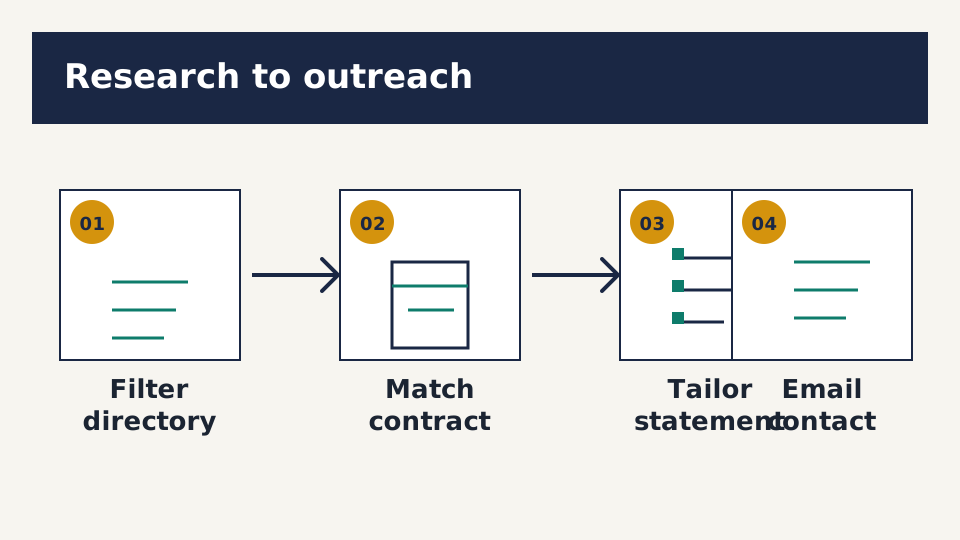
Use the SBA directory the way SBA tells you to use it: as a screening tool, not a mailing list. Filter by NAICS code, state of performance, agency, and contract dates. Then go one step further. The same SBA page points to agency-specific directories like DOT’s Subcontracting with DOT, and some agencies get even more explicit. The Coast Guard’s small business FAQ tells vendors to use agency forecasts, USAspending, and agency prime-contractor lists to find subcontracting leads. That is a much better workflow than emailing every national integrator you recognize.
Plain English: SBLO
The Small Business Liaison Officer, or SBLO, is the large contractor’s small-business gatekeeper. They do not award every subcontract themselves, but they usually control the intake lane for federal small-business outreach. If the prime has federal subcontracting goals, the SBLO or supplier-diversity contact is one of the first people who can tell you whether your capability statement is relevant or dead on arrival.
Look for live signals, not static lists
The directory gets you into the right neighborhood. It does not tell you who is building a team right now. That is where most businesses burn time. They reach out based on a contract the prime won three years ago, then act surprised when the answer is silence.
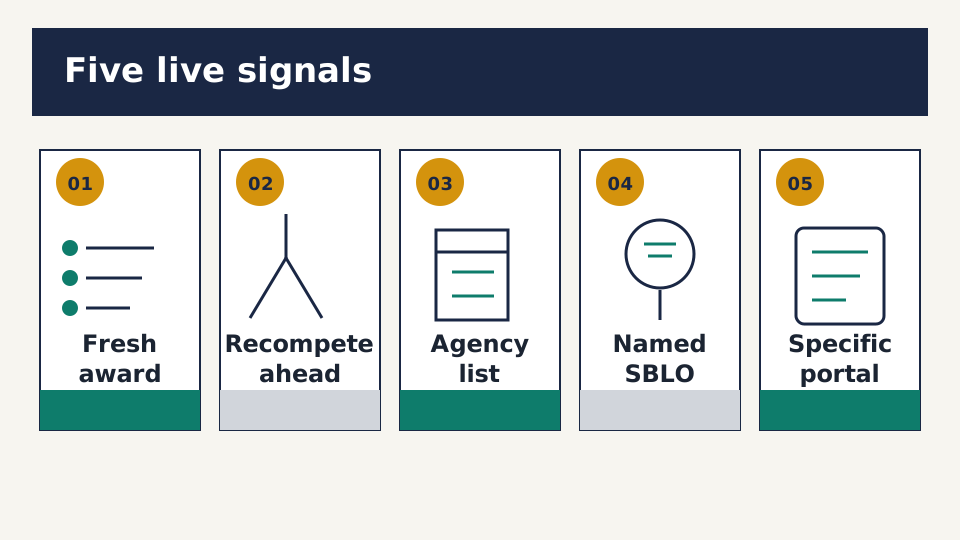
The strongest signal is a fresh award or a coming recompete in your lane. If a prime just won a federal contract in your NAICS code, or is likely defending an incumbent contract, the odds go up that it needs coverage, surge capacity, specialty labor, or a certification it does not have in-house. Use USAspending.gov plus the methods in our expiring contracts guide and agency procurement forecasts guide to see whether the prime is tied to work that is actually moving.
The next signal is an agency-specific prime list or subcontracting directory. DOT’s page points small businesses to a current subcontracting directory and says primes may post solicitations, announcements, and sources sought notices for teaming or subcontracting. Agency lists matter because they narrow the field to contractors already doing business with that agency. If you want FAA work, a prime already active in DOT is more useful than a defense giant with no transportation footprint.
Then check the prime’s supplier portal. A real federal supplier portal asks for NAICS codes, certifications, past performance, and the work you want to support. A dead portal asks for your company name and dumps you into a generic intake queue. If the portal is specific, fill it out. If it is vague, treat it as background paperwork, not business development.
Public notices help too, but you need to read them with both eyes open. The SBA’s SUBNet page is still worth watching because it lets small businesses browse subcontracting opportunities by state and keyword. But as of April 2026, SBA also says the ability to post new opportunities is not currently available. That is exactly why you should not build your whole pipeline around one site. Use SUBNet when it helps, then verify the same prime through current contracts, directories, and supplier contacts.
Make yourself findable before you ask for attention
The SBA says prime contractors use the Small Business Search, or SBS, formerly DSBS, to find small businesses. So before you email anyone, finish your SBS profile. That means your capabilities narrative, keywords, NAICS codes, socioeconomic certifications, and performance history all need to be there. If a prime searches the database after reading your email and finds a thin profile, you just gave them a reason to move on.
Your capability statement needs the same level of specificity. Do not send a one-page brochure that could apply to twenty different industries. Tie it to the contract or forecast you are referencing. If you are writing to a DOT prime about bridge inspection support, the capability statement should lead with bridge inspection support. Not generic “engineering solutions.” Not “transportation and infrastructure services.” Say the thing you actually do.
If you need help pressure-testing your target list, get your local APEX Accelerator involved early. APEX programs run matchmakers and can help you sanity-check whether a prime is a real fit or just a famous name. That is a good use of free counseling. Showing up and saying “help me find any prime contractor” is not.
The outreach that actually gets answered
If the only thing you know about a prime is that it is big, you do not have a prospect. You have a logo on a spreadsheet. Reach out only when you can reference a real contract, a real agency, and a real reason your firm belongs on the team.
A short email beats a long introduction. Mention the contract or forecast, the work you do under that NAICS code, the certification or differentiator you bring, and attach a tailored capability statement. If you found an SBLO, send it there. If the prime routes everything through a supplier-diversity portal, follow that process and then send a brief follow-up referencing the exact submission.
What you are trying to prove is simple: “We are relevant to work you are already chasing or already performing.” That is the whole game. Not “Please keep us in mind.” Not “We would love to explore synergies.” Just relevance, proof, and timing.
Your next move is to pull the SBA subcontracting-plan directory, filter it to your NAICS code and geography, throw out every prime without a live contract signal, and send three targeted emails this week. Cold lists do not win subcontracts. Live signals do.