How to File a GAO Bid Protest: What Small Contractors Need to Know
A GAO bid protest is not a general appeal of a disappointing award decision. It is a formal challenge to a federal procurement action, and the clock can be very short. Before a small contractor files, it needs a specific protest basis, a reason it qualifies as an interested party, and a deadline calculation it has checked against the governing rules. This is an orientation, not legal advice; for a live procurement, get qualified counsel involved immediately.
The Government Accountability Office describes a protest as a challenge to an award, proposed award, or solicitation terms. That definition sounds broad. The procedural rules are not.
Start with three yes-or-no questions
1. Are you an interested party?
For a solicitation challenge, GAO generally describes an interested party as a potential bidder. For an award challenge, it is generally an actual bidder that did not win. Standing can also turn on the protest issues and your place in the competition. “We think the agency made a bad choice” is not, by itself, the test.
2. What is the precise basis?
Write the concern as a verifiable procurement question. For example: did the solicitation contain a restriction that should have been challenged before proposals were due? Did the evaluation depart from the stated criteria? Preserve the solicitation, amendments, proposal records, debriefing notes, notices, and the date each fact became known. That record is more useful than a broad narrative of unfairness.
3. What is the filing deadline?
GAO says a challenge to solicitation terms generally must be filed before the deadline for initial proposals. An award protest generally must be filed within 10 calendar days after the protester knew or should have known the basis, subject to a special rule in some required-debriefing situations. Count calendar days, excluding the triggering day. Under 4 CFR 21.0(d), a last day that falls on a Saturday, Sunday, or federal holiday extends to the next nonholiday weekday. If GAO, or the agency where a submission is due, is closed for all or part of that last day, the period extends to the next day it is open. Do not invent an extension because you are waiting for an informal answer.
Filing is electronic, but it is not casual
Ordinary protests must be filed through GAO’s Electronic Protest Docketing System (EPDS). Documents containing classified information must not be filed in EPDS; notify GAO in advance for filing and handling instructions under 4 CFR 21.1(h). Its filing instructions describe a $500 filing fee and the required submission process. For ordinary EPDS filings, receipt by 5:30 p.m. Eastern Time determines the filing day under 4 CFR 21.0(g). A solicitation challenge still has to arrive before the applicable bid/proposal deadline, even if that is earlier. Uploading after the cutoff or using another delivery method is not a safe workaround. A filing also has service and content requirements; read the current Bid Protest Regulations, not a blog post, when an actual deadline is involved.
You do not need an attorney merely to file at GAO, according to GAO. But counsel matters when the facts, timing, standing, relief sought, or protective-order material are at issue. Under a protective order, only attorneys admitted to the order may see protected information. For a small team, that is a practical reason to get advice early rather than after the filing has narrowed your options.
A required debriefing changes one clock, not every clock
Under 4 CFR 21.2(a)(2), the exception covers competitive-proposal procurements where a debriefing is requested and, when requested, required. For covered grounds known before or from that debriefing, the initial protest cannot be filed before the offered debriefing date and must be filed within 10 days after the debriefing is held. This does not rescue apparent solicitation defects that required an earlier protest. Have counsel confirm the applicable debriefing process and its completion date; not every post-award conversation qualifies.
Protest timeliness and a performance stay are different. FAR 33.104(c) generally requires suspension when the agency receives GAO’s notice within 10 days after award or 5 days after the offered date of a required debriefing, whichever is later, subject to the stated exceptions. Filing a timely protest does not by itself prove that stay conditions are met. Confirm both clocks immediately, including the agency-notice requirement and any procurement-specific rules.
Turn the solicitation, award notice, debriefing request, offered dates, questions, and responses into one timeline. A protest is a legal process, not a negotiation tactic; decide what relief would actually help the business before filing.
What happens after filing?
If GAO does not dismiss the protest on procedural grounds, GAO says the agency generally has 30 days to provide its report. The protester then generally has 10 days after receiving that report to file comments; failing to do so can lead to dismissal. GAO must decide a protest within 100 calendar days, though an agency may take corrective action earlier.
The possible end states are not simply “win” or “lose.” GAO may dismiss, deny, or sustain a protest, and an agency may take corrective action. That is why a good internal decision memo should define what outcome would actually help the business: a reevaluation, an amended solicitation, a new award decision, or something else.
A practical first-day checklist
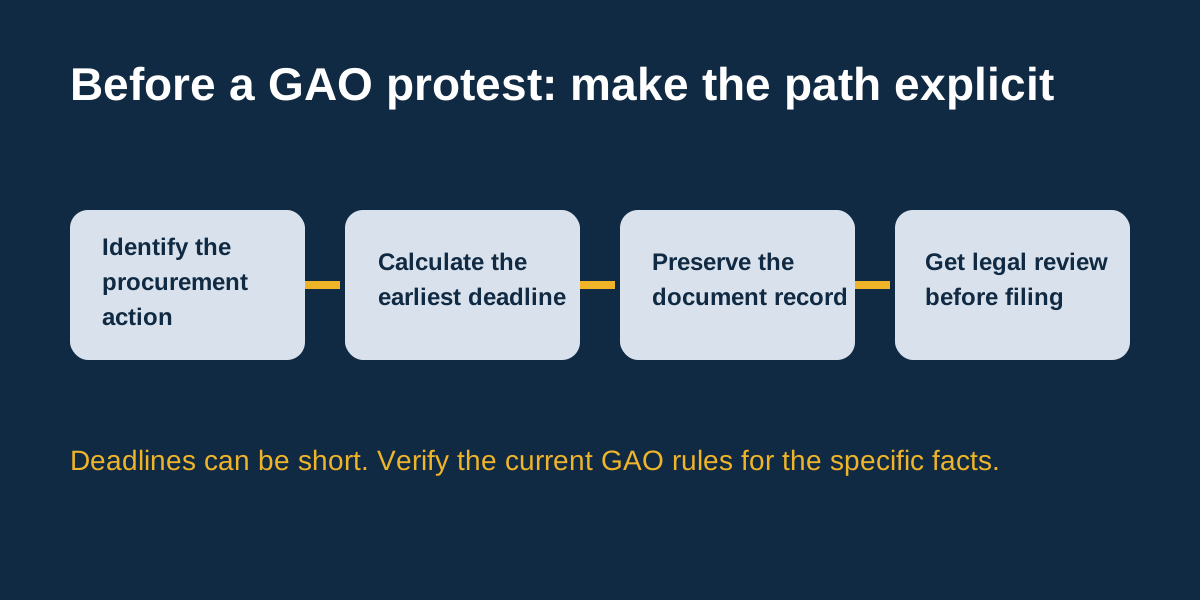
- Freeze the relevant documents and make a dated timeline.
- Identify the exact solicitation term or evaluation action at issue.
- Calculate the earliest plausible deadline, then have someone experienced confirm it.
- Check standing and the commercial value of the potential remedy.
- Review the current GAO regulations and EPDS instructions before anyone files.
Good proposal hygiene helps before a dispute exists. Keep the solicitation-reading checklist and a proposal template tied to one controlled document folder. If the contract is already underway, the habits in contract administration for small businesses make the record easier to reconstruct.
Your next step
Make the fact-and-date timeline today, then have procurement counsel check standing, the filing deadline, and any stay deadline against the actual procurement. Keep the current GAO regulations and EPDS instructions open while preparing the submission.