SF 1449 block-by-block instructions for small businesses
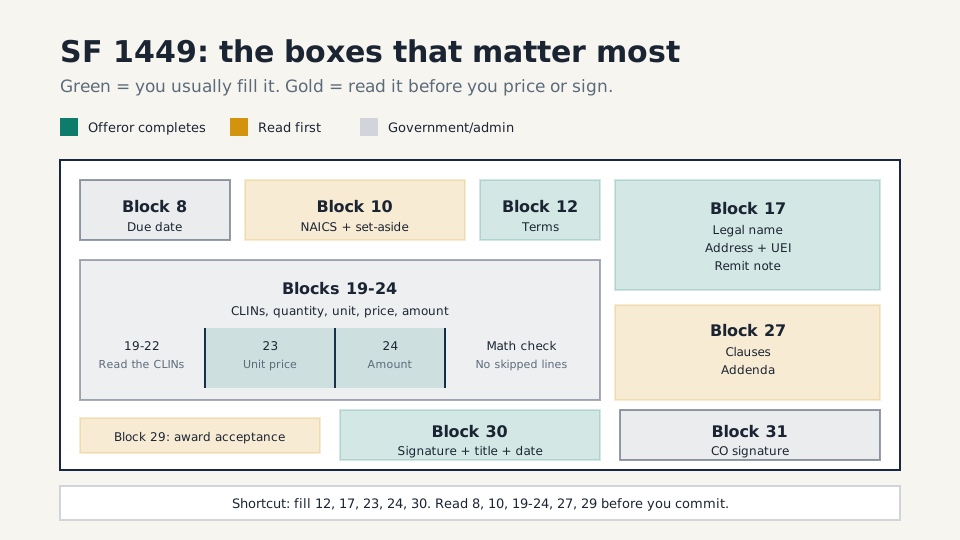
SF 1449 is the two-page cover sheet the government uses for many commercial-product and commercial-service buys. As a contractor, you usually complete only blocks 12, 17, 23, 24, and 30 because the form itself says those are the offeror blocks. Everything else still matters though. Block 8 gives you the deadline, block 10 gives you the NAICS and set-aside, block 27 tells you which commercial-item clauses control the offer, and block 29 is where the government turns your signed response into an award.
If you’ve opened an SF 1449 and felt like it was trying to be four different documents at once, that’s because it is. Depending on the buy, it can function as a solicitation, an offer, an award, or a purchase order cover sheet. The trick is knowing which boxes are yours, which ones are the government’s, and which ones tell you whether the opportunity is even worth chasing.
What SF 1449 actually is
GSA’s current form page lists SF 1449 as “Solicitation/Contract/Order for Commercial Products and Commercial Services” and still shows the current revision as November 2021. Under FAR 12.204, contracting officers are required to use SF 1449 for paper commercial acquisitions above the simplified acquisition threshold when they are not using the streamlined combined synopsis/solicitation procedures. Since the threshold update effective October 1, 2025 raised the simplified acquisition threshold to $350,000, you should expect to keep seeing SF 1449 on a lot of commercial buys above that level and on plenty of smaller buys too.
The important mental model is this: SF 1449 is the cover sheet, not the whole deal. FAR 12.303 says the package can continue onto extra pages for line items, the schedule of supplies or services, remittance details, accounting data, clauses, and solicitation provisions. So do not stare at page one and assume everything you need is inside those boxes. The actual statement of work, CLIN structure, attachments, and addenda usually live behind it.
Plain English translation
Think of SF 1449 as the label on the file folder. The label still matters because it tells you who issued the buy, when the response is due, what kind of solicitation it is, and whether your signature can become a contract. But the real meat is often in the pages behind it.
The five blocks you usually complete
The form itself includes a note at the bottom of page one: “Offeror to complete blocks 12, 17, 23, 24, and 30.” That is the shortcut most first-time bidders need.
Block 12: discount terms
This is simply your prompt-payment discount language. If you offer terms like “1% 10 days, Net 30,” this is where they go. Most small businesses either state standard commercial terms or leave no discount. Do not overthink it. If you do not offer a prompt-payment discount, just use your normal invoicing terms and move on.
Block 17: contractor/offeror
This is the identity block. It needs the legal entity name and address of the business making the offer. FAR 52.212-1 also requires the offer to show the offeror’s name, address, phone number, and the Unique Entity Identifier in that name-and-address block.
The practical rule is blunt: make your entity information match SAM. Use the same legal business name, UEI, and contact pattern everywhere. Do not put a DBA on the SF 1449, the LLC name in the cover letter, and a parent-company address in the price sheet. Bid protest records are full of vendors who created avoidable trouble by making the government guess which entity was actually bound.
If your remittance address is different from your main address, say so clearly in the offer. The form itself tells you to do that in block 17b, and FAR 12.303 specifically calls out continuation space for remittance information when needed.
Blocks 23 and 24: unit price and amount
This is where sloppiness gets expensive.
Page two repeats blocks 19 through 24 because that is where the line items live. Block 23 is the price for one unit. Block 24 is the extended amount for that line. The unit in block 22 controls the math. If the unit is “hour,” your unit price is an hourly rate. If it is “lot,” your unit price is a lump-sum lot price. If it is “each,” price each.
Read the CLIN structure before you touch these boxes. If the solicitation breaks the buy into a base year and option years, price each period exactly as instructed. If it includes travel, ODCs, or a not-to-exceed line, do not improvise. Price every line the government asked you to price, and re-check the multiplication before you submit.
Block 30: signature, printed name, title, and date
This is the assent block. If the solicitation requires a signed SF 1449 back, sign it. FAR 52.212-1 says offers may be submitted on the SF 1449, on letterhead, or in another format the solicitation allows. But if the instructions say “return the signed SF 1449,” do not assume a separate cover letter fixes an unsigned form.
Use the name and title of someone who can bind the company. That sounds obvious until a rushed team has a coordinator sign a proposal package that the agency expected to be executed by an officer or authorized negotiator. Fix that before deadline day, not after.
The blocks you do not fill, but absolutely need to read
The contractor-facing blocks are only half the story. These are the ones that tell you whether the buy is real, winnable, and priced correctly.
Block 8: offer due date and local time
This is the first box to read. Miss it and nothing else matters. Watch the local time language closely, especially if the issuing office is in another time zone.
Block 10: set-aside, NAICS, and size standard
This is your bid-or-no-bid filter. The form shows whether the buy is unrestricted or set aside, plus the NAICS code and size standard. If the NAICS does not fit your business, or the set-aside requires a certification you do not hold, stop and figure that out before you waste a day on pricing.
Blocks 19 through 22: item numbers, schedule, quantity, and unit
These blocks define what you are pricing. They tell you whether the government wants one lot, 2,000 labor hours, twelve monthly reports, or a mix of option periods and one-time items. If the units look odd, do not gloss over them. Ask questions before you price against the wrong denominator.
Block 27: incorporated clauses and addenda
This box is more important than it looks. SF 1449 states that the solicitation incorporates FAR 52.212-1 and FAR 52.212-4 by reference, and that 52.212-3 and 52.212-5 may be attached. In plain English, this is where the government tells you the commercial-item rules that govern your response and award. If there are addenda, read them. That is often where page limits, invoice instructions, agency-specific clauses, and evaluation quirks hide.
Block 29: award of contract
Leave it alone when you are submitting the offer, but understand what it means. This is the government’s acceptance language. It references your offer and says the offer is accepted as to the identified items. That is why missing amendments, using the wrong entity name, or pricing the wrong CLINs is not a harmless typo. The government is trying to accept a specific offer from a specific business on specific line items.
Best companion guide
If you want the full map behind the cover sheet, read how to read a government solicitation next. SF 1449 gets you oriented. Sections C, L, and M tell you how to win.
Why small businesses get tripped up on SF 1449
If you spend any time on Wifcon threads, the same questions come up over and over: Is this an RFQ or an offer? Do I have to sign the form? Which blocks are actually mine? That confusion is normal because SF 1449 can be used for an RFQ, an RFP, or an award document, and block 14 changes the lane.
Here are the mistakes that matter most:
Treating the form like the whole solicitation. It is not. The line items, statement of work, attachments, and addenda are where the risk lives.
Using the wrong business identity in block 17. The entity offering the work should be unmistakable. If your SAM record says one thing and your SF 1449 says another, you created a problem that has nothing to do with your technical ability.
Pricing block 23 without checking block 22. Hourly, lot, and each are not interchangeable. One bad assumption can distort the whole schedule.
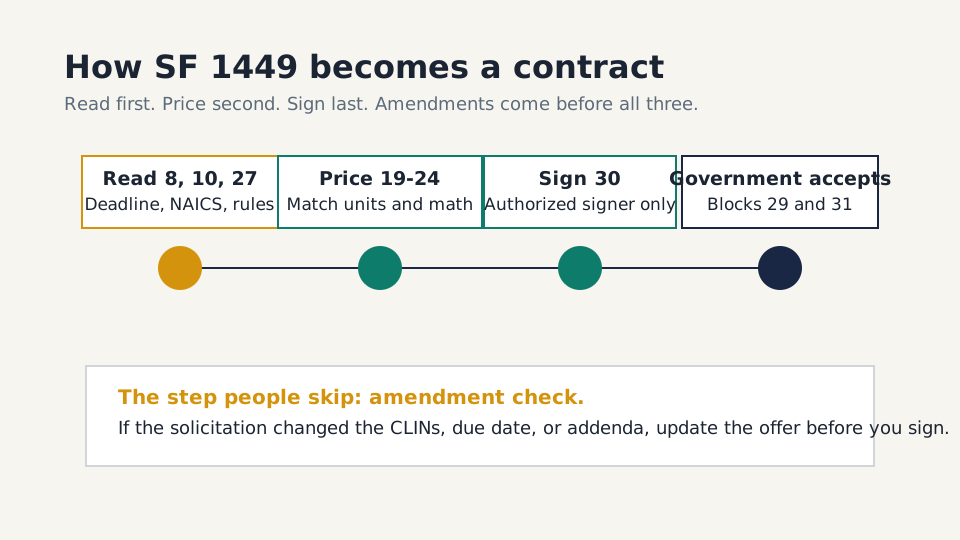
Ignoring amendments. FAR 52.212-1 requires acknowledgment of solicitation amendments. If the government revises the CLINs, due date, or instructions, your old signed form is not enough.
Signing without checking block 27 and the addenda. That is how contractors agree to terms they never actually read.
A five-minute SF 1449 review before you submit
Before you send the package back, run this quick check:
- Confirm the deadline in block 8 and the solicitation instructions match.
- Confirm block 10 shows a NAICS code, size standard, and set-aside status you can actually bid under.
- Match the legal entity name, UEI, and address in block 17 to SAM.
- Check every priced line in blocks 19 through 24 for math, units, and option-year coverage.
- Confirm you acknowledged every amendment and read every addendum referenced in block 27.
- Sign and date block 30 with an authorized company representative.
That is the real job. Not memorizing every box. Just making sure the form, the pricing, and the business identity all line up cleanly.
Your next move
Pull one live commercial solicitation from SAM.gov and do nothing except review the SF 1449 cover sheet and pricing pages. Mark block 8, block 10, block 27, and every CLIN on page two. Then compare that package against our government bid proposal template so you can see how the cover sheet turns into an actual response.
Once SF 1449 stops looking mysterious, commercial-item bids get a lot less intimidating. It is not magic. It is just a cover sheet with a few boxes that matter more than the rest.