NAICS code lookup guide: how to find the right code
The right NAICS code is the one that best describes the work your business actually gets paid to do now, not the work you hope to do next year. The fastest path is to search the Census NAICS database, read the full six-digit descriptions for your finalists, then compare them against the current SBA size standards before you update SAM.gov.
Get this wrong and the problem follows you. Your small-business status can change by code, your SAM profile can look sloppy to primes, and you can waste time chasing set-asides under a size standard that does not fit your business.
What a NAICS code actually does
Plain English: NAICS code
A NAICS code is the government’s shorthand for what kind of business you are. In contracting, it helps decide whether you count as small for a given opportunity and how buyers, primes, and databases classify your company.
The 2022 NAICS Manual makes two points that clear up most of the confusion.
First, NAICS is a classification system, not a certification. Census says there is no central government agency that “approves” NAICS codes for businesses. Agencies assign or use codes for their own programs based on the business activity in front of them.
Second, NAICS gets more specific as you add digits. Two digits gets you to the broad sector. Six digits gets you to the specific U.S. industry. If you stop too early, you usually pick a code that is technically related but still wrong for contracting.
In federal contracting, the code matters because SBA size standards ride on top of it. The SBA size standards guide explains that a company can be small under one NAICS code and other than small under another. That is why people get tripped up in SAM. They think “small business” is one universal label. It is not. It is industry-specific.
How to look up the right NAICS code
Start with revenue, not aspiration. If 70% of your business comes from janitorial work and 30% comes from handyman services, your primary code should point to janitorial work. Do not lead with the code you wish were true because it has a friendlier size standard or sounds more impressive.
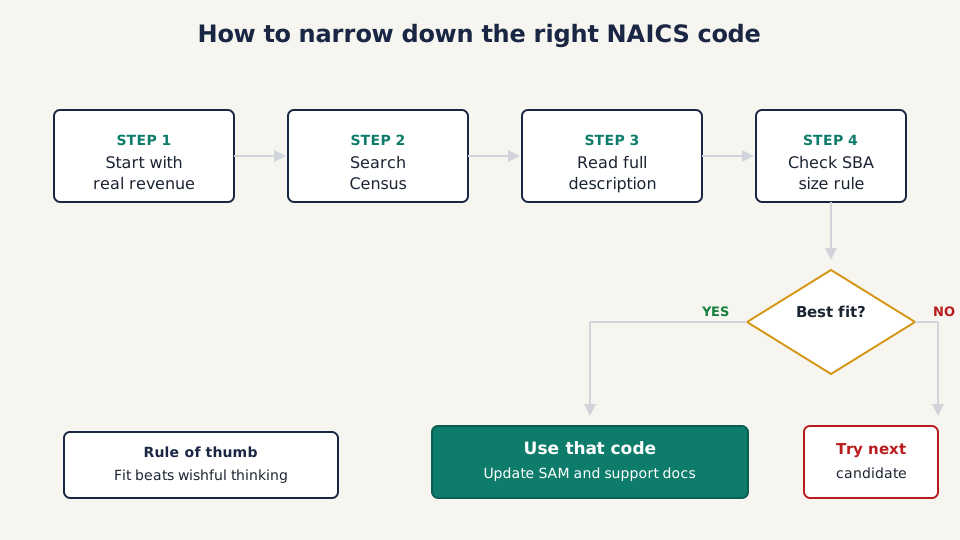
Here is the process I would use:
- Write down the one activity that produces the biggest share of your revenue.
- Search that plain-English phrase in the Census NAICS search.
- Open the likely six-digit matches and read the full description, not just the title.
- Check the cross-references and example activities to make sure you are not sitting in a neighboring code by mistake.
- Pull up the SBA size standards table or Size Standards Tool and confirm how SBA measures size for that code.
That third step is where most people get lazy. The title can look right while the full description tells you the code belongs somewhere else. Census’s own FAQ says to identify the primary business activity first, then read the narrative description, cross-references, and illustrative examples before you settle on a code. That is the part that saves you from a bad guess.
One more practical point. The NAICS structure changed in 2022, and FAR 19.102 says new NAICS codes are not used in federal contracting until SBA publishes matching size standards. Right now, federal contracting is using the 2022 structure with SBA’s current size table. If you are working from an old spreadsheet, a 2017 manual, or a consultant’s stale PDF, you can end up carrying the wrong code forward for years.
Your SAM profile and the solicitation code are not the same thing
This is the question that keeps coming up in contractor forums: “Do I need my SAM primary NAICS to match every solicitation I bid?” No.
Your SAM profile should reflect the work your company really performs. But when an agency issues a solicitation, the contracting officer assigns the solicitation’s NAICS code based on the principal purpose of that specific buy. Under FAR 19.102, the contracting officer must pick the one industry that best describes the acquisition, giving weight to the NAICS manual, the solicitation description, and the component with the greatest share of contract value.
That means two things:
- You can be a perfectly legitimate bidder on an opportunity even if the solicitation code is not the same as the one you think of as your primary lane.
- If the agency picked the wrong code, you are not stuck with it. SBA says you can file a NAICS appeal within 10 calendar days of the solicitation or the amendment that changed the code.
If you do a mix of work, be honest about it. Pick the code that matches your core business as primary. Then make sure your capability statement, past performance, and SAM profile all tell the same story. What primes and contracting officers hate is not a secondary code. They hate a profile that looks like you threw darts at the NAICS manual.
Mistakes that waste weeks
Choosing the biggest size standard instead of the best-fit code. This is the fastest way to create credibility problems. SBA can protest size status, primes notice when your marketing does not match your codes, and the wrong code can put you into the wrong competitive bucket.
Stopping at the keyword search results. The Census search box is only the first pass. Read the full description and the cross-references. “Close enough” is how you end up under the wrong code.
Forgetting that affiliation changes the math. SBA’s size standards page says you must include the receipts or employees of affiliates when you calculate size. If another company can control yours, even on paper, your size status can change fast.
Assuming SAM updates itself when size standards change. SBA’s size standards table includes an explicit notice: businesses registered in SAM.gov must update their registration for the new size standards to flow through. If you do not update SAM, your profile can keep showing status under the old standards.
Treating NAICS like a one-time setup chore. It is not. Recheck your codes when your revenue mix changes, when you move into a new service line, or when you start bidding in a market that uses a different code than your commercial work.
Your next move is simple. Open Census NAICS search in one tab and SBA’s size standards tool in the other. Pick the code that matches your real work, then update your SAM profile before you start chasing bids. If you are still building the rest of your registration stack, the SAM.gov registration guide, CAGE code guide, and government contracting acronym glossary are the next reads.