CPARS explained for small contractors: ratings, deadlines, and how to respond
CPARS is the federal government’s past performance system. If your contract or order is large enough to require an evaluation, agencies generally enter annual and final ratings there, and future source selection teams can see them. The practical rule is simple: treat every CPARS notice like a short fuse. FAR gives you up to 14 calendar days to submit comments before the evaluation can start following you into future competitions, even though the CPARS system keeps the comment workflow open longer.
Most small businesses do not worry about CPARS until the first notice lands in someone’s inbox. That is late. By then, the real argument is not about tone. It is about whether your contract file already proves what happened.
What CPARS is, and when it actually applies
CPARS stands for Contractor Performance Assessment Reporting System. Under FAR 42.1502, agencies are supposed to prepare past performance evaluations at least annually and again when the work is complete. Those evaluations go into CPARS, which is the governmentwide system source selection teams use when they size up your track record.
The dollar threshold matters. Acquisition.gov’s October 1, 2025 threshold update raised the simplified acquisition threshold from $250,000 to $350,000. So for most contracts and orders, that is the line where CPARS becomes mandatory. There are special rules for construction and architect-engineer work too. Construction evaluations are required at $900,000 and up. Architect-engineer evaluations are required at $45,000 and up.
One detail that surprises people: a modification can trigger the requirement. If the base contract started below the threshold and a mod pushes it over, FAR 42.1502 says the agency still has to prepare the evaluation. Single-agency task orders are a little looser. The contracting officer may require order-level evaluations when that would be more useful than one roll-up rating on the parent vehicle.
Plain English: CPARS is not just a punishment file
CPARS is the government’s written memory of how you performed. Good work shows up there too. If you hit schedule, manage change well, and keep the customer from chasing you for basics, that record helps on the next bid.
What gets rated, and who writes it
The evaluation is supposed to be grounded in objective facts, not vibes. FAR 42.1503 says the writeup should include a clear description of the contract’s purpose and should be based on program and contract performance data. Agencies can pull input from the technical office, contracting office, program office, COR, end users, and other people who actually watched the work.
At a minimum, the government rates these areas:
| Factor | What it means in practice |
|---|---|
| Technical | Did the work product meet the requirement? |
| Cost control | Did you manage cost well on contract types where that matters? This does not apply to firm-fixed-price work. |
| Schedule | Did you hit milestones, due dates, and delivery commitments? |
| Management | Did the government have to babysit you, or did you run the contract like adults? |
| Small business subcontracting | If the contract required a subcontracting plan, did you meet the goals and pay small subs on time? |
| Other | Agencies can add issues like trafficking violations, defective pricing data, or subcontracting-limit failures when relevant. |
The rating scale runs from Exceptional to Unsatisfactory. The useful middle point is Satisfactory. Table 42-1 in FAR 42.1503 says Satisfactory means you met the contract requirements, even if you did not go beyond them. That matters because some contractors panic when they do not get Very Good. A clean Satisfactory is not a scarlet letter. It is the government saying you did the job you promised to do.
The timeline that trips contractors up
This is where people get burned.
FAR 42.1503 says contractors get up to 14 calendar days from notice of the evaluation’s availability to submit comments, rebutting statements, or additional information. The same section says agencies have to provide review above the contracting officer when the parties disagree.
That is the legal window most people should care about first. But the system workflow is longer and more confusing than the FAR summary makes it sound.
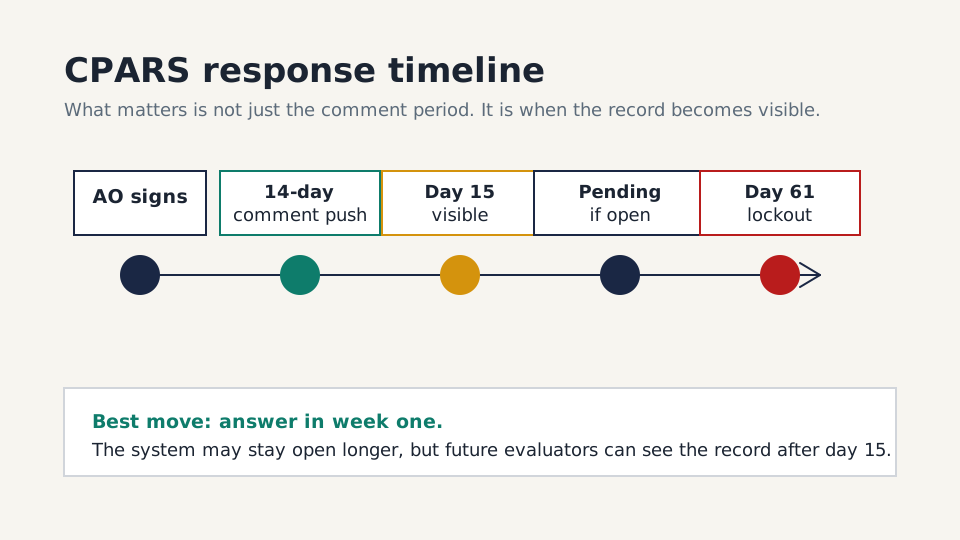
The November 2025 CPARS User Manual says the contractor representative has a total of 60 days after the Assessing Official signs the evaluation to send comments in the system. It also says the evaluation becomes available for source selection on day 15 whether or not it has been closed and whether or not you have commented. If no comment is in and the evaluation is still open, it shows as “Pending.” On day 61, the contractor rep is locked out.
That split is why smart contractors move in the first week, not on day 14. Yes, the system may still let you add comments later. But source selection teams can already see the evaluation starting on day 15.
If you spend any time on contractor forums, the same complaints keep coming back in different words: the notice went to the wrong contractor rep, somebody thought there was “plenty of time,” or the company discovered too late that an open evaluation was already visible as Pending. None of those are hard problems. They are admin problems.
Best companion guide
If you want fewer CPARS fights later, tighten up the record while the contract is live. Contract administration basics for small businesses covers the paper trail that makes a rebuttal much easier.
How to respond without making it worse
Start by separating factual errors from judgment calls.
If the evaluation says a deliverable was late and you have an acceptance email showing it was on time, that is a factual correction. If the evaluation says your communications were weak, that is judgment. You can still push back, but you need a cleaner record and a calmer tone.
Here is the response structure that usually works best:
- Identify the section and rating you disagree with.
- State the exact fact in dispute.
- Attach the support: acceptance emails, modification dates, meeting notes, invoice approvals, cure-response history, or approved schedule revisions.
- Ask for a specific correction.
Bad rebuttal: “We strongly disagree and believe this rating is unfair.”
Better rebuttal: “The schedule narrative states Deliverable 3 was ten days late. Modification P0004 moved the due date from March 15 to March 29, and the government accepted the deliverable on March 28. We request the schedule narrative and rating be revised to reflect on-time performance under the modified delivery schedule.”
Keep the emotion out of it. The government is retaining your response as part of the evaluation. Future evaluators may read it. So write for the next source selection team, not just for the current argument.
One more trap from the CPARS User Manual: if the contractor enters comments but never returns the evaluation within the 60-day period, the partial comments can be removed and the system can fall back to the standard note saying no comment was offered. That is a brutal outcome if your team assumed draft text in the system was enough. Finish the workflow.
Why CPARS matters on the next bid
This is not just post-award housekeeping. It feeds future competitions.
FAR 15.305 says past performance is one indicator of an offeror’s ability to perform successfully. Evaluators are supposed to consider the currency and relevance of the information, the source of the information, the context, and the general trend. That last part matters more than most people realize. One rough evaluation does not automatically kill you. A pattern of the same problem can.
The same FAR section also says the solicitation has to let offerors identify similar federal, state, local, or private contracts, and that an offeror with no relevant performance history may not be evaluated favorably or unfavorably. That helps true beginners. But once you have CPARS history, it becomes part of the stack the government reads alongside your past performance reference template, reference checks, and whatever story your proposal tries to tell.
If you are a large prime with a subcontracting plan, do not ignore the small-business factor just because the technical work is going fine. FAR 42.1502 requires agencies to assess performance against subcontracting-plan goals and unjustified slow payment to small subs. If that part of your record is shaky, fix it before the next evaluation cycle. Our small business subcontracting plan guide covers what the government expects.
The mistakes worth preventing now
The first mistake is letting the wrong person sit in the contractor rep seat. If that email goes to a project manager who left six months ago, your “response time” starts anyway. Verify the contact now.
The second mistake is trying to win with speeches instead of documents. CPARS is a record problem. Treat it like one.
The third mistake is waiting for the annual or final evaluation to discover performance drift. By that point, the narrative is already writing itself through late deliverables, undocumented changes, rejected invoices, or a COR who had to remind your team of basic requirements three times in a month.
The fourth mistake is assuming a Pending evaluation is harmless because it is not final yet. It is still visible for source selection after day 15. That alone should kill the habit of waiting until the last minute.
Your next move
Open your active contracts list and verify the CPARS contractor representative for each one this week. Then make one folder for every award that holds deliverable acceptance, schedule changes, invoice approvals, and issue-resolution emails in one place.
That is how you protect the next proposal before the CPARS notice ever shows up.